
A Hint after the Gate Opens
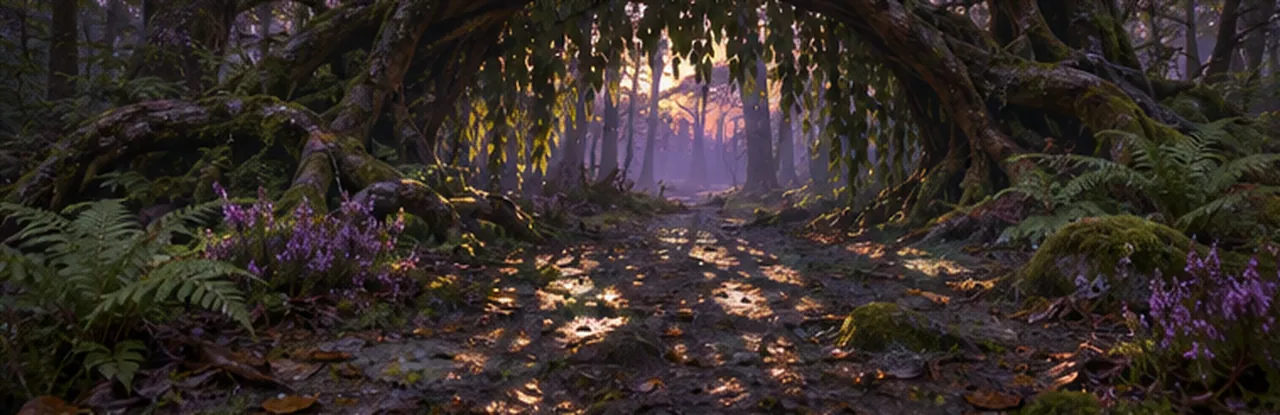
Return to a gap after the last sound
At the end of the first gate test the root arch moves slightly and a narrow piece of light appears in the opening. In the earlier cut the optional hint disappeared as soon as the gate began to move. That gave a clear event but left very little time to compare the change with the place where the player had first heard the sound. Many people turned toward the open path before they could point to the earlier clue.
Keep an older edge near the opening
The current version keeps a lower root in the foreground as the gate moves away from it. One bent leaf remains beside it after the stronger light begins to fade. Look for the side of the root that held that leaf before opening the gate. The relationship stays visible even when the rest of the fringe grows dark. It gives the player a way to explain which piece of a phrase was connected to that part of the gate.
Make the later clue quieter
The earlier bright prompt could cover half the opening. If it remained after the scene changed, it seemed to indicate the next decision rather than something the person had just done. We shortened its visible line and let the return view use part of the root and one leaf instead. The new clue can still be compared from slightly farther back without suggesting a new translation at the same place.
Allow a return after trying the phrase
Gate That Speaks in Leaves leaves the open gate visible while the traveler takes a step back. At this angle the rim takes a warmer light and the original dark branch comes into view from the side. A person can look up to identify the last shape they used and then walk through. That order gives the end of the scene a softer transition between a test and a path.
Find a related clue after a shift in sound
The Bark Keeps a Mark concerns a fixed detail in the trunk that can be matched to an earlier pause. Once the gate opens that detail moves toward the edge of the frame but still lies above a dark notch. You can connect the place near the leaf to the older mark if you remember part of the pause. The two cues make it possible to place the example from a brief return view.
Make the forest stay active
In one illustration all leaves became still once the gate opened. It put emphasis on a quiet reading but looked as if the whole forest had changed. We let the higher branches move a little while holding the smaller clue at the root. That part of the image now becomes quieter in relation to the surrounding foliage. The person has time to find what remains visible without a change to the whole forest.
Watch from a position that misses the hint
If a player takes a side path they might arrive at the opening after the strongest glow has already gone. Place the bent leaf near the first corner of the root, where it can still be seen from a lower bank. The root keeps its direction across both positions. A second image can show enough of it to explain why the current opening belongs to the phrase used before reaching the side path.
Let the note stay available later
Canopy Studies places this record under Interaction design and Memory. It connects the last view to the actual action of opening and returning instead of extending the earlier hint indefinitely. The next test will adjust the angle at which the traveler arrives. We should be able to see the surviving reference even if the previous position is mostly hidden behind the opening.