
Where the Wind Breaks Vowels
Forest Clue Paths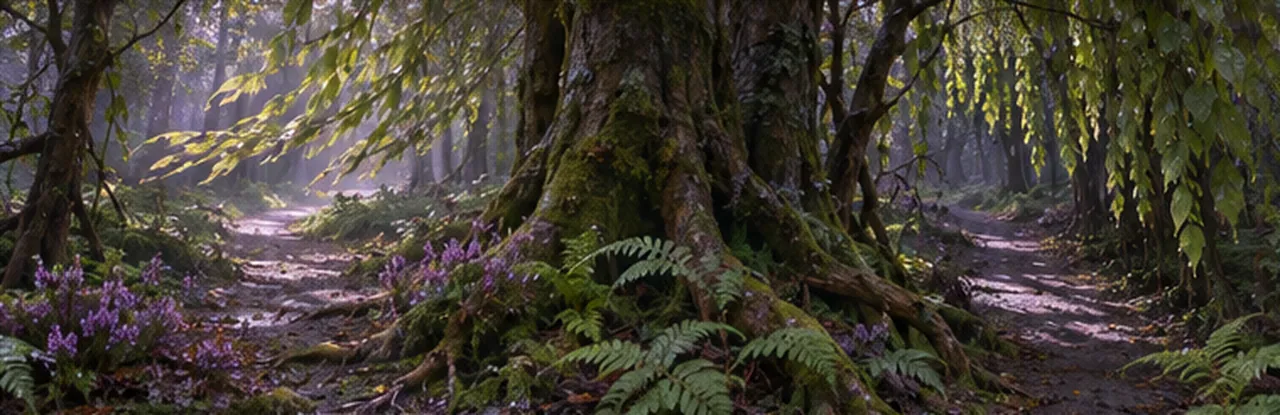
Walk toward the space between two curtains
The first corridor opens beside a tree that hides part of a second trail. From the middle, you can see a thin opening through the left curtain of leaves and a wider place on the right. An invented vowel begins while wind pushes the lower leaves across one opening. Another rush of air comes after it and changes the sound in a different way. The player has to listen from a place where enough of the difference remains available.
Compare the view from each side of the trunk
On the near side the low branch shows where motion began. From the other side the thinner upper part of the curtain bends only after the earlier movement has already begun. Listening Left and Right records the change in position needed to keep both directions readable. Carry a short part of the sound from the first view to the second and listen for the place it now seems to end.
Keep the pause in your translation
The shape of the second part can sound shorter when leaves are moving close to the traveler. You can return to a point near the roots to compare its quieter outline. A longer pause between the two winds gives time to choose a note that still belongs to the phrase. Pitch beside a Pause uses a different gate to study a small silence that remains visible in the fringe before anything else changes.
Use the earlier wind as a reference
The opposite curtain can move after the closer one is already quiet. The player can trace a last tilt in the first set of leaves before paying attention to the next sound. Taking that visible shape to a wider opening gives it a relationship to the root below it. You can test the order again at the living gate where a different section of the phrase causes the nearer roots to move.
Keep another route through the arch
The forest corridor offers a second way past the trunk after the first clue has become clear. One way comes close to the gate. The other gives a slightly wider view of the tree and both its curtains. At the end, both lead to the same quiet side of the arch. A different bright shape remains from each approach, which helps the person remember where they listened first.
Let the art describe the near sound
The woods contain bright violet leaves and dark peat between roots. A small leaf can be outlined against a gap in the air before the large foliage moves. The far path has cooler light where the gate sits. Small shadows on the path follow the real wind direction in the scene. They provide another source of evidence if a person prefers to watch the motion with the main sound turned down.
An early prototype with two kinds of listening
The present game tests the same short phrase from two sides of a split path. Forest Clue Paths keeps both places available for comparison. We want a person to notice where a later sound differs without treating the next gate as a new language. A larger version could shift the later pause to another section of the path, once the original crossing gives the player a recognizable place to begin.