
Listening Left and Right
Hear the earlier air near the low root
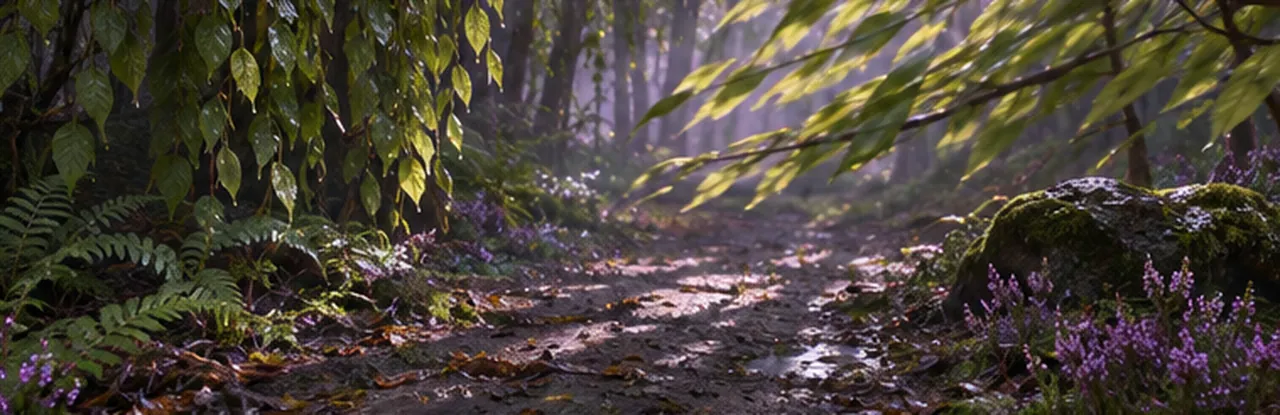
The second forest case opens where two leaf curtains hang around a tree trunk. A breeze reaches the lower group before the other side of the path moves. An early illustration only showed the tips of the leaves, which seemed to sweep almost together from the middle. A traveler trying to place the beginning of an invented sound had to choose a direction without being able to see where the motion started.
Keep the corner of the root in view
We retained a small section of the dark root beneath the nearest leaf group. It makes a solid border under the earlier wind. The far leaves begin to move later and higher in the same frame. Placing them relative to the root gives the player a way to compare directions. The first view can show a very short opening in the lower layer before the second wind reaches the other side.
Turn to the second side after the first sound
Moving around the trunk can bring the far fringe and the near root into view at the same time for a little while. The early leaf movement becomes much smaller. The later movement becomes visible beside a brighter branch. The path gives the traveler space to stop where both are clear. In Where the Wind Breaks Vowels this is one of the choices that can carry a remembered sound to another position without losing the earlier side.
Keep the second part of the sound short
The leaf motion lasts longer than its first audible change. The wind settles into a faint texture after reaching the upper group. We leave the louder part of the invented vowel near the moment when the brighter branch begins to show. Putting the support in the same shot helps the player connect where the sound came from with which change actually mattered for the phrase.
Compare the earlier silence in the arcade
Pitch beside a Pause is a different first view of a gate. It follows one rhythm in a single fringe. The wind study uses two viewpoints, so each keeps something the other lacks. The visible shape under the lower group stays after the first air moves away. That makes it useful to return to the beginning before comparing the second sound to a mark by the gate.
Let one branch look similar from the other side
The traveler can follow a path that goes behind the tree instead of alongside it. A low view there shows a different edge of the nearer root. The broad dark base remains recognizable from the first view. If the player arrives just before the second wind, they can still see the first group grow quiet. That order offers a second way to place the same part of the phrase even with less of the starting sound.
Find a static clue after the wind
In The Bark Keeps a Mark an old crack remains visible after the foliage casts another shadow. It gives a place for the person to remember where a sound belonged. The wind study can use one of those marks beyond the trunk after both groups have gone still. Leave the nearest branch shape beside the start of the path so the traveler can identify which part they came from.
Put the direction under the sound role
Canopy Studies keeps this record with another one about rhythm. An upcoming test may reverse the two opening shapes and see whether the same method still works. In that version, keep a stable ground reference beneath each moving group. That gives the different wind a recognizable source without requiring a strong motion across the entire view.